Quantum computing explained with a deck of cards
by Dario Gil · quantum computing: unlocking infinite possibilities
- quantum mechanics
- computing
- education
- technology
Quantum Computing: Unlocking Infinite Possibilities
Introduction to Quantum Computing
Quantum computing represents a revolutionary leap in technology, promising to solve complex problems that are currently beyond the reach of classical computers. Unlike traditional computers that process information in binary bits (0s and 1s), quantum computers use quantum bits or qubits, which can exist in multiple states simultaneously. This capability unlocks infinite possibilities in fields like cryptography, drug discovery, and optimization.
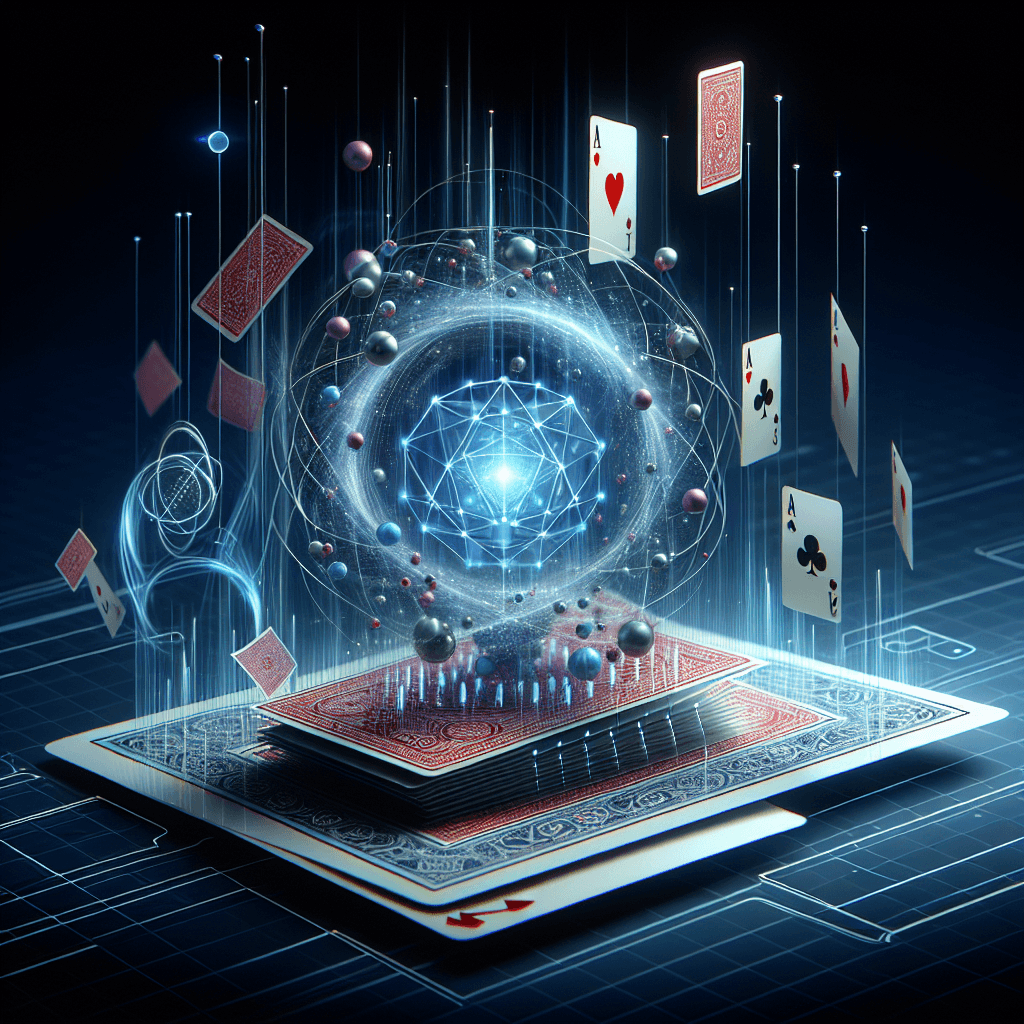
The talk title, "Quantum Computing Explained with a Deck of Cards," suggests an accessible analogy to demystify these concepts. Imagine a standard deck of 52 playing cards—each card can represent data in ways that mirror quantum principles. Let's dive into this analogy to make quantum computing more approachable.
The Basics: Classical vs. Quantum Computing
Classical computers are like a straightforward game of solitaire. Each card (bit) is either face up (1) or face down (0), and operations flip or move them one at a time.
Quantum computing, however, is more like a magical deck where cards can be in multiple positions at once. This is due to key quantum phenomena:
- Superposition: A qubit isn't just 0 or 1; it can be both until observed.
- Entanglement: Qubits can be linked so that the state of one instantly affects another, no matter the distance.
- Interference: Quantum states can amplify or cancel each other out, enabling complex calculations.
These principles allow quantum computers to perform many calculations in parallel, exponentially speeding up certain tasks.
Explaining Quantum Concepts with a Deck of Cards
Let's use a deck of cards to illustrate quantum computing. Picture the deck as a quantum system—each card symbolizes a qubit.
Superposition: The Face-Down Card Trick
In a classical deck, a card is either the Ace of Spades or not. But in quantum terms, a face-down card could represent superposition: it's potentially any card until you look. A quantum computer explores all possibilities simultaneously, like shuffling and dealing multiple hands at once to find the best poker combination instantly.
For example:
- A classical computer checks each hand sequentially.
- A quantum computer evaluates all possible hands in parallel, finding the royal flush much faster.
Entanglement: Paired Cards Across the Table
Entanglement is like having two cards that are mysteriously linked. If you reveal one as red, the other instantly becomes black, even if they're miles apart. In quantum computing, this allows for instantaneous correlations, enabling algorithms to solve problems like factoring large numbers (crucial for breaking encryption) with unprecedented efficiency.
Imagine dealing entangled pairs in a game: changing one card affects its partner, creating a web of dependencies that classical systems can't replicate.
Quantum Gates: Shuffling the Deck
Quantum operations, or gates, are like shuffling techniques that manipulate the deck's state. Gates such as Hadamard (creating superposition) or CNOT (entangling qubits) transform the probabilities, much like cutting the deck or performing a riffle shuffle to mix possibilities.
Applications and Infinite Possibilities
Quantum computing's power opens doors to transformative applications:
- Cryptography: Shor's algorithm could crack current encryption, necessitating quantum-resistant methods.
- Drug Discovery: Simulating molecular interactions to design new medicines faster.
- Optimization: Solving logistics problems, like the best routes for delivery trucks, in seconds.
- Artificial Intelligence: Accelerating machine learning by processing vast datasets simultaneously.
- Climate Modeling: Predicting weather patterns or climate change with greater accuracy.
These possibilities seem infinite, but challenges remain, such as qubit stability (decoherence) and error correction, akin to keeping a deck from scattering in the wind.
Challenges and the Road Ahead
While the deck analogy simplifies quantum computing, real-world implementation is complex. Qubits are fragile, requiring ultra-cold environments to maintain coherence. Current quantum computers, like IBM's or Google's, have limited qubits and high error rates.
Researchers are advancing with:
- Error-Correcting Codes: To make computations reliable.
- Scalable Architectures: Building larger, more stable systems.
- Hybrid Approaches: Combining quantum and classical computing for practical use.
Conclusion
Quantum computing, explained through the humble deck of cards, reveals a world where information isn't linear but multidimensional. This technology isn't just about faster processing—it's about unlocking solutions to humanity's greatest challenges. As we shuffle toward a quantum future, the possibilities are indeed infinite, limited only by our imagination and ingenuity. Whether you're a novice or an expert, grasping these concepts starts with simple analogies, paving the way for deeper understanding and innovation.